
Radio Heat Cost Allocator EMS-RU-2
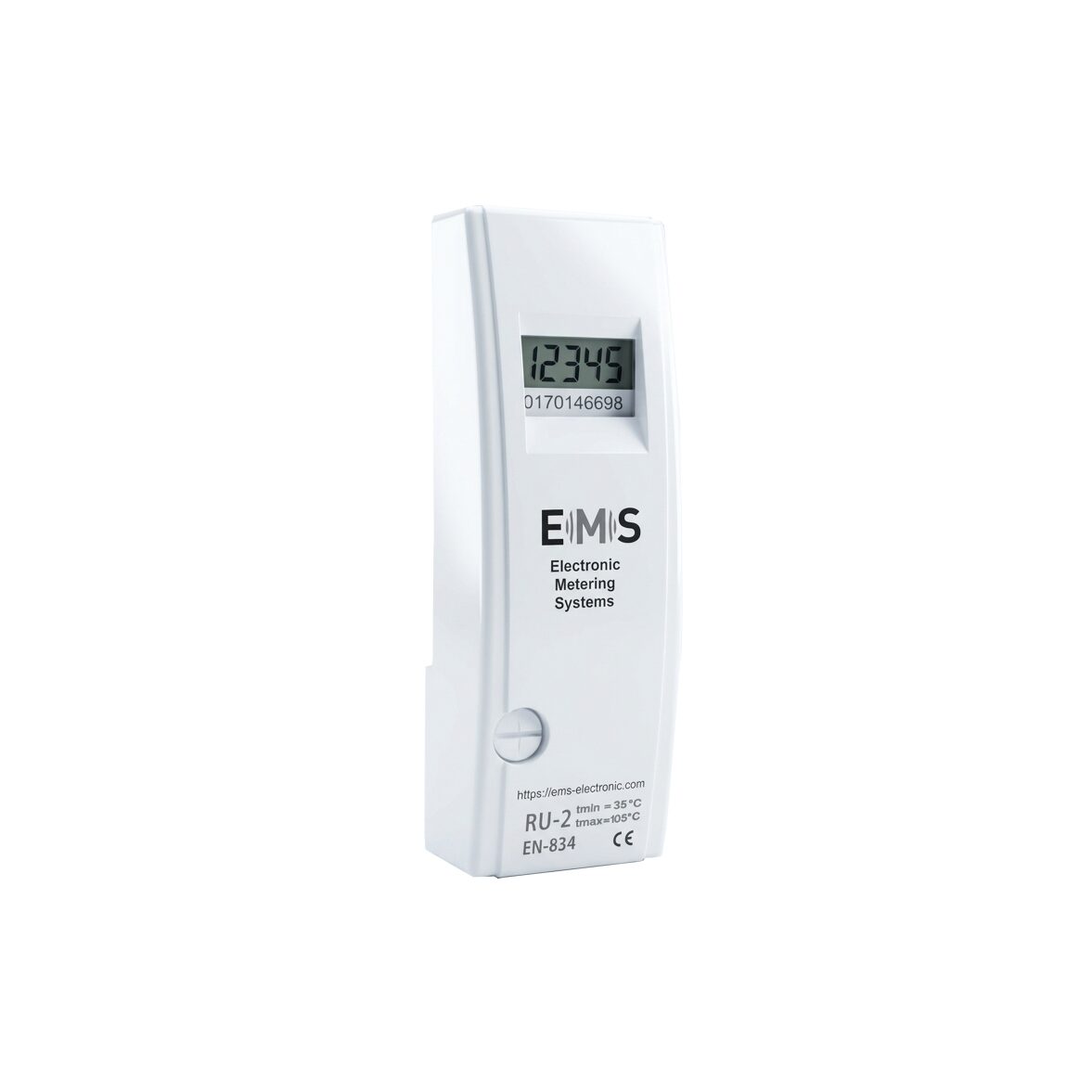
Precise, simple, and mountable on almost all radiator types – the RU-2 electronic heat cost allocator from EMS Electronic Metering Systems reliably and accurately determines the heat output of radiators
Equipped with two sensors, the EMS-RU-2 continuously measures the temperature of the radiator surface and the room air. The integrated microcontroller calculates the effective heat consumption of the radiator from these values.
The data is automatically transmitted wirelessly to a radio-data-collector (EMS-DACOS). This eliminates the need to inspect the apartment, read the consumption data, and manually document the consumption figures.
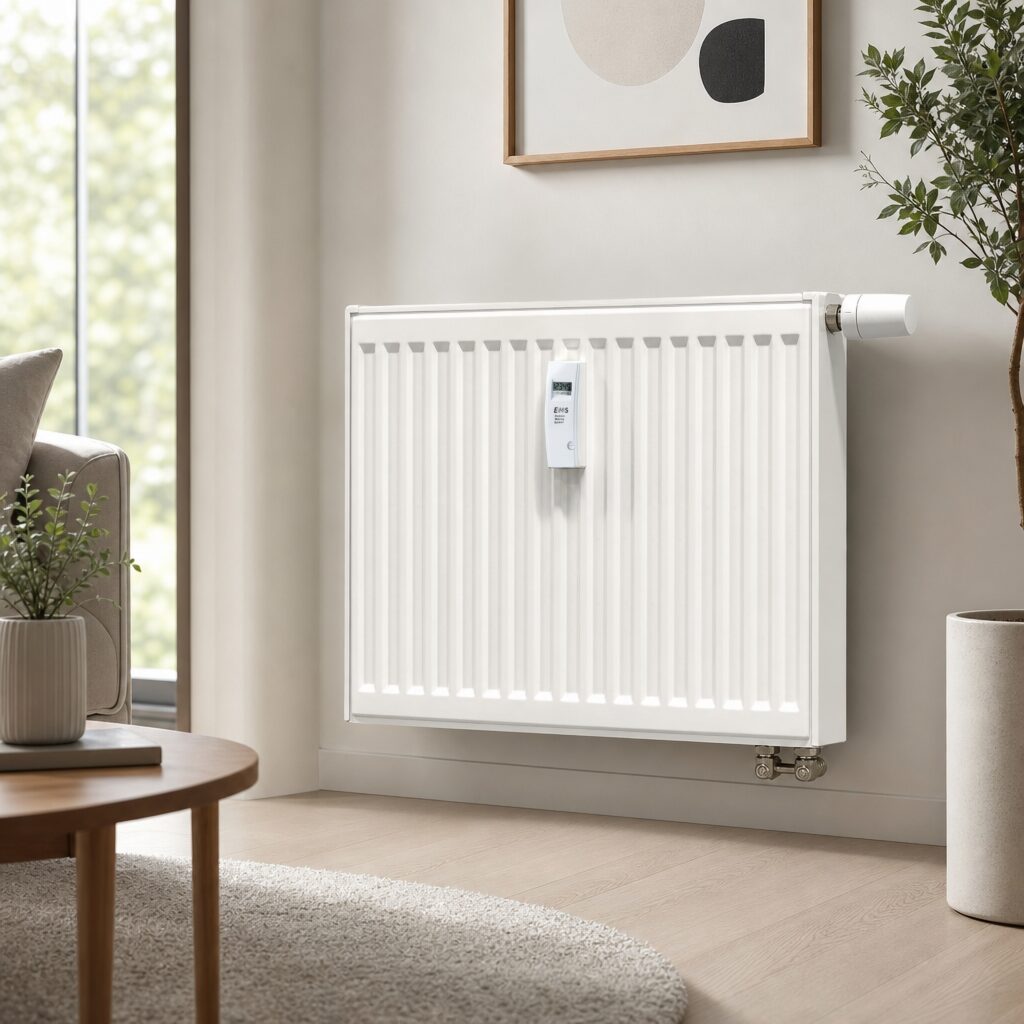
The elegant and timeless design makes the device a stylish addition to any radiator.
Variably Programmable
The EMS-RU-2 offers numerous programming options. The billing date, the start date, and the option to deactivate metering outside the heating season can all be set as needed.
Large Storage Capacity and Transponder Interface
The large storage capacity allows for the retrieval of the last 14 daily values, the last 18 monthly values, the last 3 yearly values, as well as the highest and lowest measured radiator and room temperatures for each stored month. The transponder interface integrated into the RU-2 allows for programming, parameterization, and maintenance without having to remove the device from the radiator. Software and firmware updates can also be installed via this interface, and the entire stored data can be read.
Ideal for Multiple Heat Sources:
The device’s two sensors and intelligent evaluation method ensure that only the actual heat output of the radiator is determined. This automatically detects and takes into account any external heat influences – for example, from a tiled stove in the room.

No More Need to Enter Apartments:
The stored measurement data from the heat cost allocator is transmitted wirelessly to a permanently installed data collector (REDAC system) or to a mobile data collector (Walk-by, MODAC system). A special encryption method reliably prevents any transmission errors. Due to the low transmission power and minimal transmission duration, electromagnetic interference is eliminated. With mobile data collection, the devices are programmed to send their radio telegrams during a precisely defined time interval. With centralized data collection, the radio telegrams are received by battery-powered data collectors (EMS-DACOS) that are permanently installed in the building’s public corridors. The increased data security, the continuous availability of readouts and stored consumption data, and the option to upgrade with a GPRS link are the main advantages of centralized data collection. Data collectors upgraded with a GPRS link can automatically transmit the stored measurements to the central server of EMS Electronic Metering Systems via mobile network. This enables efficient energy controlling, energy benchmarking, and the implementation of a smart submetering system.
| Model | EMS-RU2 heat cost allocator (radiator sensor and room air sensor are located in the housing of the EMS-RU-2) |
| Measurement principle: | Dual-sensor principle: Measurement of radiator temperature and room temperature |
| Lifespan | 10 years + 18 months reserve |
| Display | Five-digit LCD, special characters |
| Reading principle: | Manual reading via the display, reading via transponder, walk-by function or radio reading via stationary data collectors |
| Features: | Individual parameterization of each device for the radiator being monitored, including power factor and KC value Continuous monitoring of radiator heat output Recording of the last 14 daily values Recording of the last 18 monthly values Recording of the last 3 years’ values Recording of the maximum and minimum radiator and room temperatures per month, including the date Continuous, internal, cyclical self-checks of the following functions (if an error is detected, a message is displayed on the LCD or an alarm is sent via radio telegram): Monitoring of the device for tampering attemptsMonitoring of the battery voltageMonitoring for temperature sensor failures or broken wiresMonitoring for memory errors Parameterization of the start time for consumption recording (delayed start) Reading of current temperature values via transponder Detection of external heat sources (recording the time during which the room temperature is higher than a user-defined value, even though the radiator is not in operation). Parameterization of a heating-free period (no heat output is recorded during this time) Operating mode selection: Manual reading (radio unit deactivated)Network operation, REDAC system (radio unit activated)Walk-by operation, MODAC system (radio unit activated) The desired operating mode can be set on the device at any time using a transponder. |
| Radio frequency: | 868.38 MHz, data encryption |
| Radio telegrams | Programmable average number of radio telegrams per day |
| Protocol content: | Current valuesMonthly values (last 18 months)Annual values (last three years)Time-based logging of external heat influenceStatus messagesError messages |

